Lifelogging paves the way for Embodied AI
Lifelogging Merges with Embodied AI Training
Over the past year, I've been working with multi-modal agentic models and attempting to bridge the gap between physical and digital worlds. What I'm watching unfold is the convergence of an old technology — lifelogging — with something radically new: the ability to take our everyday life experiences and use them to train both digital and physical AI counterparts.
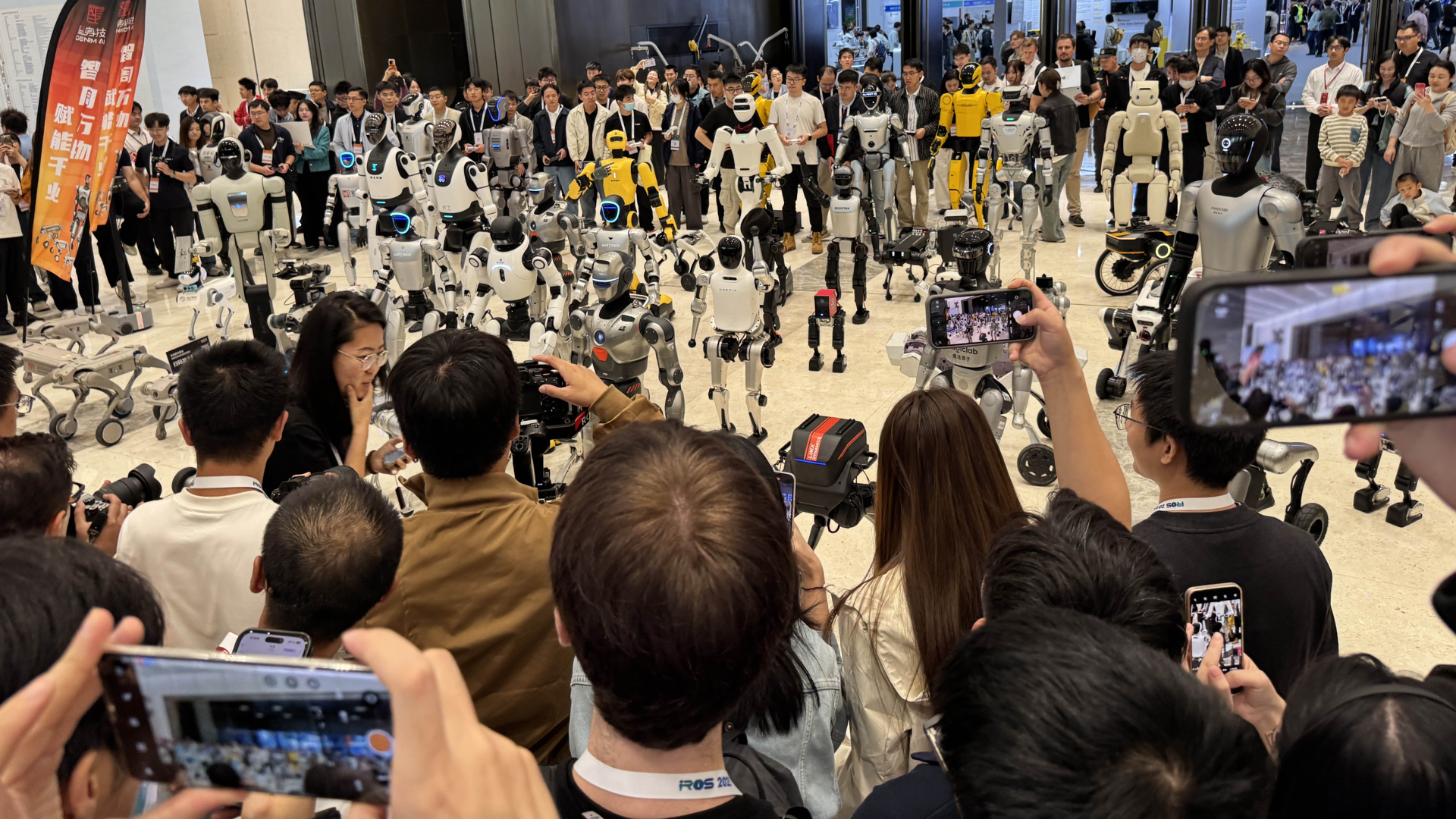
Consider what's actually happening right now in the robotics market. Right now research estimates that there are over 1,000 robot companies in the world.
Total Robotics Market Size
There are 1,092 robotics-focused seed and angel investors tracked globally, which implies thousands of companies receiving early-stage capital.
Federation of Robotics tracks unit economics: global industrial robot installations hit $16.7B in value in 2024, with 542,000 units installed and an operational stock of 4.66M robots worldwide. Asia & Australia accounted for 74% of installations, Europe 16%, Americas 10%.
The global robotics market has a projection of $218B by 2031 at a ~20% CAGR. Broader definitions that include software and services run higher — reaching $416B by 2035.
Roughly 26 robotics unicorns worldwide as of 2024, with ~38% based in the U.S. The "Big Four" — Fanuc, ABB, KUKA, Yaskawa — still control 56% of the industrial market.
Mega-rounds: Figure raised $1B in 2025 — the first billion-dollar round for a robotics startup. Physical Intelligence raised $400M at a $2B valuation.
I am an angel investor in Apptronik - which closed a $350M Series A. Skild AI then topped that with a $1.4B Series C in early 2026.
The majority of investment is flowing into three areas: vision systems, dexterity (the ability to manipulate objects), and mobility. These aren't arbitrary areas of investment. They're the building blocks of a robot that can function autonomously in human spaces. But here's the critical gap: most of these robots are trained on generic, simulated data — datasets built in controlled environments, optimized for efficiency, but fundamentally divorced from the idiosyncratic way you move through your home, you organize your refrigerator, you perform the small rituals of daily life.
The structural read
Capital is concentrating violently — fewer, bigger checks aimed at humanoid platforms, foundation models for embodied AI, warehouse automation, and surgical robotics. Investment in autonomous vehicle robotics fell from 70% of robotics funding in 2019 to 30% in 2023; the dollars shifted to vertical robotics solving specific industry problems. Consumer robotics, despite being a real and growing category, attracts a small slice of total robotics VC — the money chases industrial buyers with capex budgets, not households with discretionary spend.
Worth flagging: these are all physical robotics numbers. "Doing AI" software platforms that orchestrate human + AI labor (your Oddkin lane) get counted in different buckets — usually under AI agents, vertical AI, or consumer AI — and don't show up in robotics TAM at all.
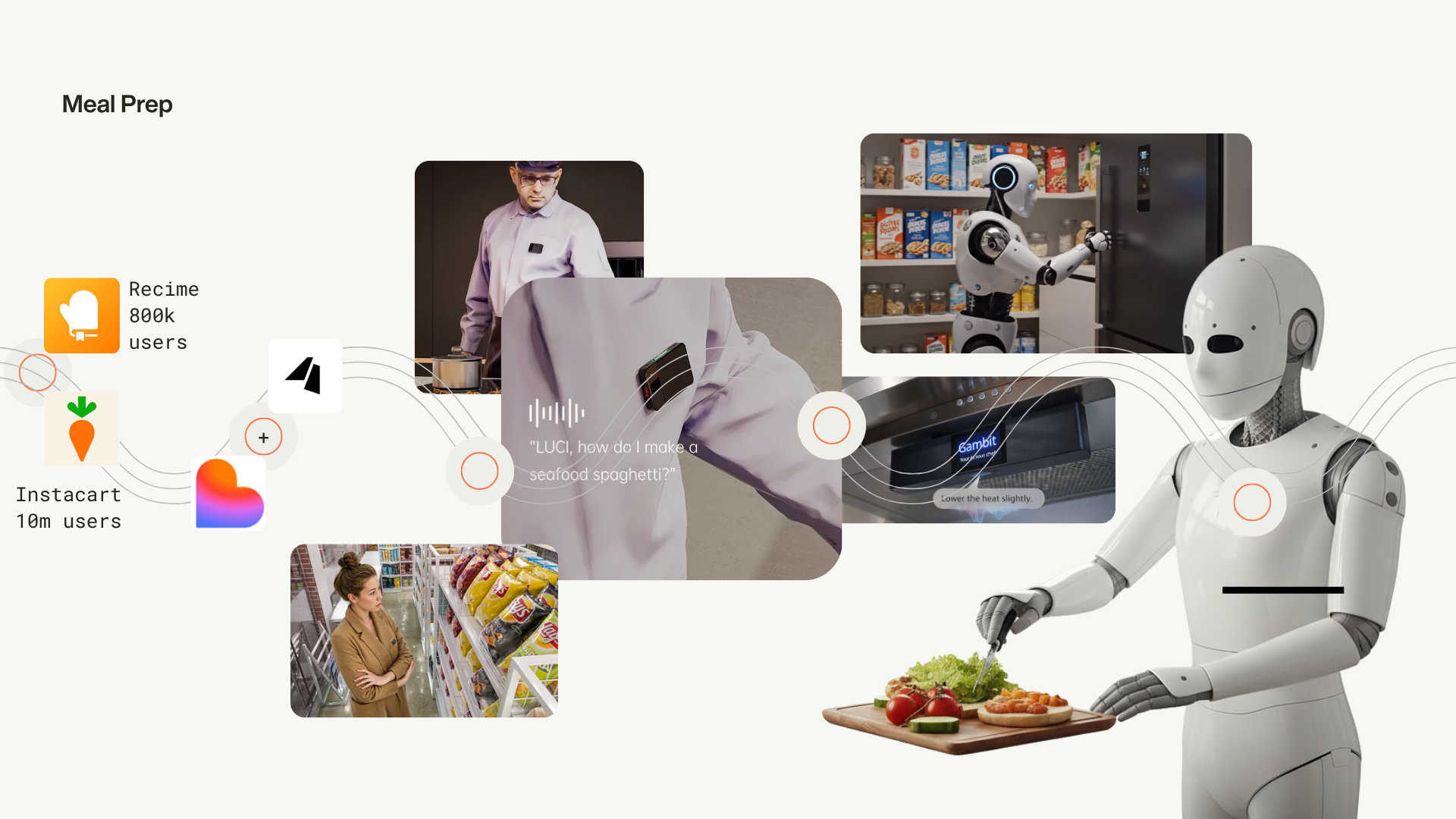
One of the most recent products I’ve looked is being launched by Memories.ai — a team that built a video-first model trained to understand continuous narrative instead of isolated frames, paired with a pin-like wearable called LUCI that continuously streams 4K video through their Large Visual Memory Model, creating a searchable archive of your lived experience. I spent weeks with the founder understanding their thesis. This team understands something fundamental: your life is the training data. Your footage isn't metadata. Your footage is the curriculum. But the question I kept asking was: if life is the curriculum, what happens when the robot arrives before you've had a chance to teach it your way?
Here's what I learned spending a year running my own lifelogging pipeline. The difference between generic training data and personal training data isn't just volume — it's structure. That gap between generic task execution and your personal execution is not a refinement problem. It's the entire infrastructure problem that's waiting to be solved.
Why the Gap Exists (And Why It's an Opportunity)
Here's the structural reason no one has solved this yet.
Robot companies make their money on hardware margins. Tesla Optimus will cost $20-30k. That price point means they need to sell millions of units at scale. Custom training pipelines for each user — capturing your lifelogging data, curating it, translating it — that's expensive and slow. So they optimize for the fastest path to "functional robot," which is generic training data and generic task execution. Why spend three months building your robot when you can sell one that works for most people in three weeks?
AI companies are optimized for the opposite: generalization. OpenAI's Claude and GPT-4 are incredible because they work across millions of use cases. But the margins are in scale, not personalization. If I build a model that's 10% better at cooking specifically your way, I can't monetize that. I can only monetize a model that's 1% better at cooking for everyone. So the incentive structure pulls toward broader, not deeper.
Consumer camera companies — Ray Ban, Indy, the wearable space — they see themselves in the hardware business. They built the cameras. But they haven't wired up the thought that turns lifelogging into training material. They haven't connected the dots between "we capture your life" and "we can now teach a robot to live like you." It's not on their roadmap.
And the last piece: personal data companies would need to operate in a regulatory minefield. Privacy, consent, data ownership, cross-jurisdictional complications. If I build a startup that says "give us your lifelogging data so a robot can learn from it," I'm signing up for lawsuits, regulatory scrutiny, user trust issues that have taken me ten years to solve. Most VCs won't fund it. Most founders won't touch it.
So the gap persists. Not because it's technically hard — it's not. But because solving it requires someone willing to stay in that uncomfortable zone: low margins, high trust, high complexity, for long enough to build the infrastructure that everyone else needs.
The Missing Infrastructure Layer
This brings me to the architecture problem that nobody in the robotics space has solved yet. If household robots are going to enter our homes and perform meaningful tasks, they need more than vision. They need personalization at the infrastructure level. Right now, we talk about this problem in fractured ways: how do we give a robot access to your personal data? Is it like sideloading apps onto a device? Is it like giving a robot your iPhone? Is it like provisioning a separate device on your existing plan?
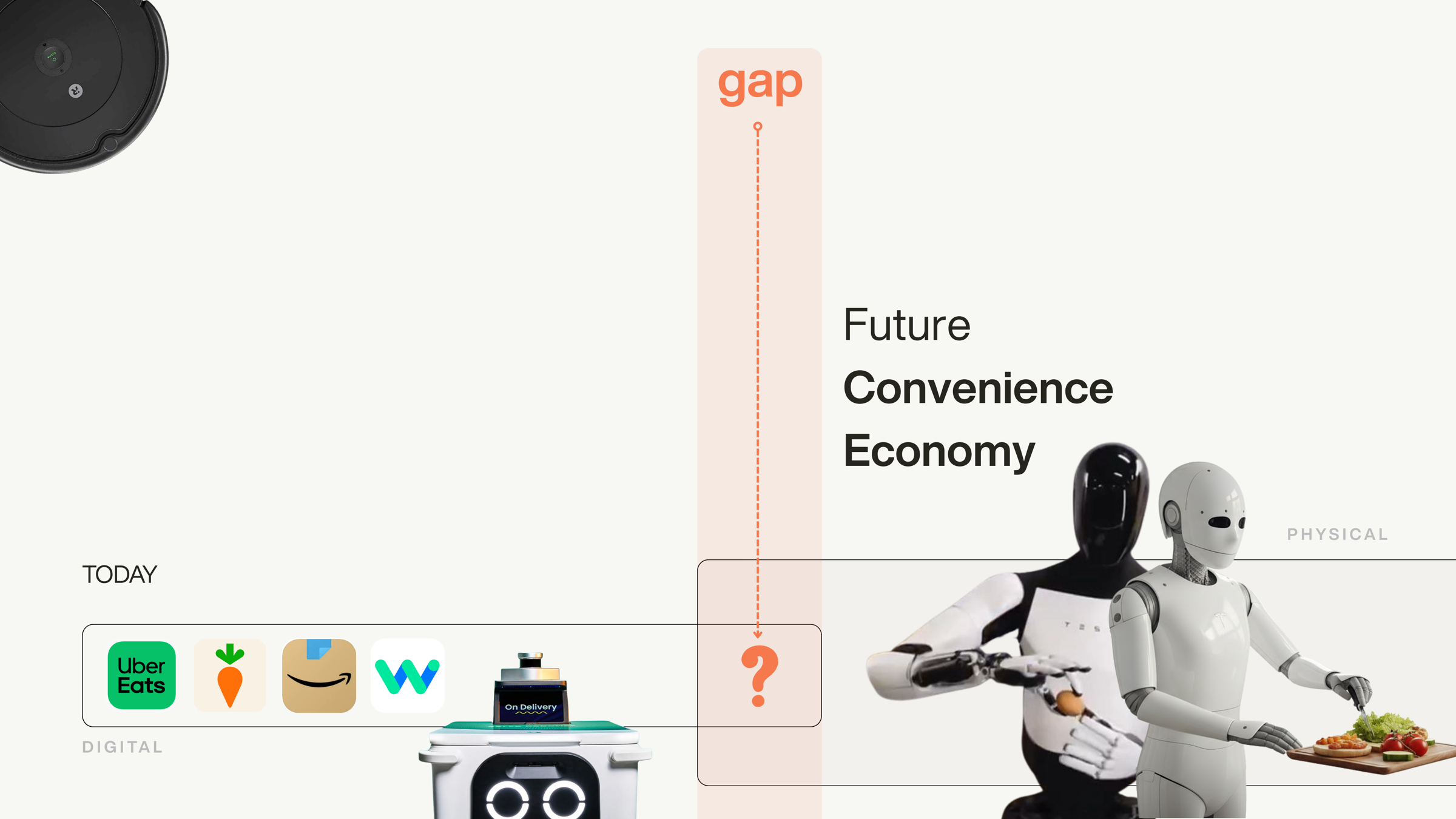
None of those framings are quite right, because they all assume existing consumer-device paradigms. What we actually need is something that doesn't exist yet: a personal data layer that's compatible with embodied AI. A system that translates your lifelogging data — your visual memory, your movement patterns, your decision-making in real-world contexts — into training material that teaches robots not just what to do, but how you do it.
A personal data layer for robots has to solve three distinct problems.
First: Owned Data — the raw material. This is the video, sensor streams, and movement logs from your lifelogging camera (and your wearables, your phone, etc). The meals you make in your kitchen, captured exactly as you make them. It's messy, unstructured, hundreds of gigabytes of your life. And some researchers are already using this data, along with the neural networks that are used to train self-driving cars, to train robots.
Second: Curated Data — the external knowledge you've chosen to act on. This is the TikTok recipe you saved and used to plan your meals for the week. The cooking techniques you've read about, the meal plans you've downloaded, the kitchen hacks you've decided to try. This is the intentional input layer — the things you've explicitly selected to guide your behavior.
I am looking for the bridge between the digital and the physical. Companies like Viam, founded by MongoDB creator Dwight Merriman, are building the orchestration layer. Gambit (powered by Viam) is attempting to teach robots to cook by understanding your kitchen environment and your cooking patterns.
Third: Derived Data — the patterns that emerge when owned and curated collide. The way that a home robot interprets they way you cook and learns this It's what happens when you take that TikTok recipe and cook it your way, in your kitchen, and the lifelogging captures how you specifically interpret and execute it. Let’s say - the robot notices how small you dice your tomatoes and incorporates that data into it’s skill.
Most robot training data is generic. A personalized household robot would need all three.
The gap between how a generic algorithm performs a task and how you personally perform it is not a user experience problem. It's a training data problem.
The "Do It Like Me" Problem
The only missing piece is the data layer that transforms all that surveillance infrastructure into training material for the robot you actually want in your home — the one that remembers how you do things and learns to do them the same way.
We're at an inflection point. Tesla Optimus starts limited production in July 2026, with $20–30k pricing and plans to scale to 10 million units annually by 2027. Figure AI raised $1.7 billion at a $39 billion valuation backed by Microsoft, Nvidia, OpenAI, and Jeff Bezos. The humanoid robotics market is projected to exceed $13 billion by 2029. The infrastructure is here. The vision systems are getting better every quarter. The dexterity challenges are being solved. But we still don't have a standard for how a robot learns your specific way of living. We don't have a "Human API" for personal data.
The First Robot That "Gets" You
Imagine it's 2028. You have a household robot in your kitchen. You bought it at Best Buy.
This robot has been learning from you for a year. It's watched 14 months of your mornings captured from your AI wearable. It knows you meal-prep on Sunday mornings and that when you batch-prep, you play the same playlist, every time. It knows you prefer your glassware to plastic containers and how thoroughly you like your vegetables cooked.
But here's the thing the robot also knows: it knows when you're tired. Not because you told it. Because it's learned the difference between your movement at 7am (efficient, precise, 2.1 meters per second) and 9pm (slower, more careful, 1.8 meters per second). When the robot detects the 9pm pace, it adjusts. It moves efficiently around you. It knows you're tired and adjusts its behavior accordingly.
That's not AI that follows instructions. That's AI that learned by watching you live. And it learned because someone built the infrastructure that connected your lifelogging (wearable, device) to your curation engine (the choices and rhythms the data shows) to your robot's behavior (the execution that mirrors how you do things, not how a kitchen robot does things).
This robot — the one that feels like it knows you — exists because someone solved the personal data infrastructure problem. Because they owned the gap between lifelogging and embodied AI, between surveillance infrastructure and useful personalization. They built the connective tissue. And that connective tissue could be worth more than the robot itself.
And what are the limits of your new helper?
Now imagine you never had to stand in line to make a return, ever again.